Be yourself; Everyone else is already taken.
— Oscar Wilde.
This is the first post on my new blog. I’m just getting this new blog going, so stay tuned for more. Subscribe below to get notified when I post new updates.
Be yourself; Everyone else is already taken.
— Oscar Wilde.
This is the first post on my new blog. I’m just getting this new blog going, so stay tuned for more. Subscribe below to get notified when I post new updates.

He is the person who known his mistake and realize and save the chicken. He is soul and hearted person. He has less money but he didn’t go back he ask for help. So,every person realize their mistake and save the person or anything. yes the humanity is there in our hands only. Now a days the people who is acted that is like the real story and imagine story of the reality examples are bahubali2 and kgf. And I learn that what ever we do with our’s believeness and truth hearted. The person who understands his fault is really dare to accept it because mostly the persons didn’t accept their mistakes. And we respect everything thing good in our world.
The most inspiring men in the world.the 4 rules which is succeded by Abdul kalam is:1) I will have great aim.2) I will continue acquire knowledge.3) I will do hard work. 4) I will persevere and succed. These are the very important rules to become a good and knowledge person. The teacher is more opportunity to us they Will grow minds and dreams. They teach discipline. They become a great human being and better than us. Any task we do we come across a problem.problem should not become the captain of the individual. Learning gives creativity, creativity leads to thinking, thinking provides knowledge, knowledge makes us great these are the most inspirational and useful in our life to become success. Failure is not an issue.we take C.V raman, newton they break their imagination and they changed. So every person make sure that if we fail we can’t end our lives try to become successfull person. And the knowledge not only from books get from different resources we have a lot.we create so many things in our own. We have that much of thinking power.we have consume it. Everyone respect the teacher who teaches us everything in our life to become a great person. We are thankful to them by giving their knowledge to us. The Abdul Kalam is very peaceful and descent person have a great knowledge and respect.

This picture show that how the people are there in earlier.the women’s didn’t have any stylish clothes and they not show the fashion.there dedication and determination is very important for their life’s and believes. There faces are not with makeup. And fair and lovely.they are taken padmashree awards with their lot of hardwork and etc.. They achieve their goals with their confidence.they are looking very simple and formal dresses. The women is very powerful compared with boy as shows in the figure because only one men but three women’s. They taken awards with the great men who infront of them.and they taken among all the leaders and who is there with white dresses in the following figure. Their awards are looking very formally. Their smile is very peace and greatful. They are all old humans. The old is gold is very believable cotation.
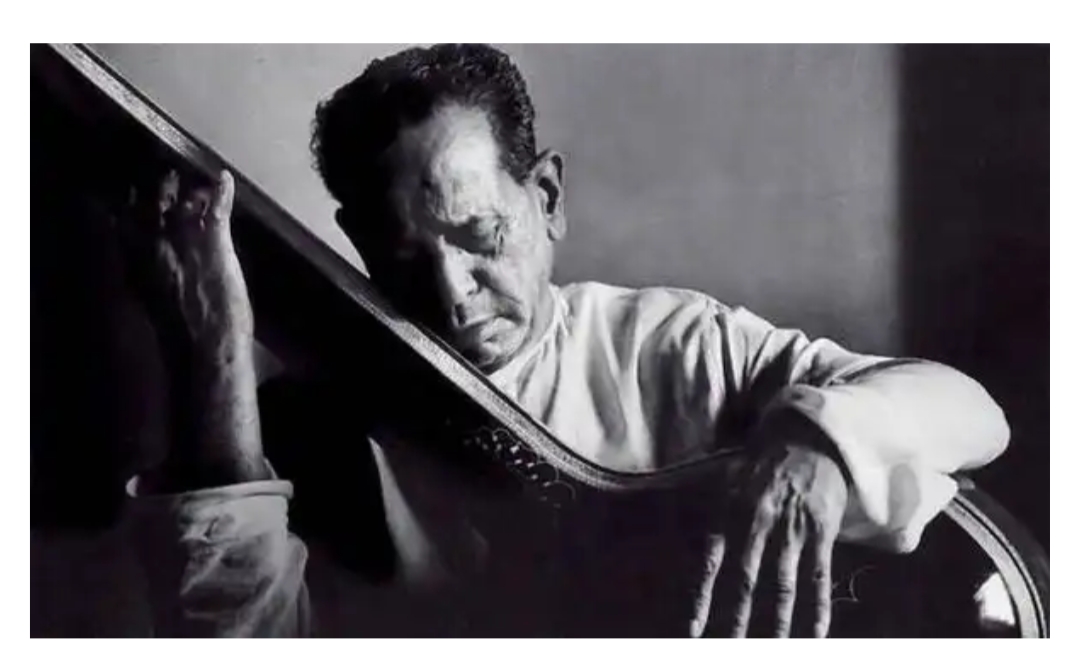
A brilliant exponent in the field of Hindustani classical music, Pandit Bhimsen Joshi is a legend who had not just earned the respect and admiration of his fans but that of his critics as well. Famous for perfecting the Khayal, a form of Hindustani classical, Bhimsen Joshi was also known for his presentation of devotional music. His ‘bhajans’, which were usually sung in Kannada, Hindi and Marathi languages, are widely recognized and appreciated not just by ardent music lovers but also by devotees all over the country. This versatile singer has also recorded Kannada Dasa Krithis in Dasavani, the likes which are usually sung by Carnatic musicians. His most memorable performance that is recalled by his fans even today is the song ‘Mile Sur Mera Tumhara’. His golden voice which appealed the Indians to be united and stand as one nation is an evergreen number that is hummed even today by one and all.

Childhood
Bhimsen Joshi was born into a Madhwa Brahmin family and was the eldest among his 16 siblings. When he was just a kid, he lost his mother and since then was raised by his father and stepmother. At a young age, Bhimsen was smitten with musical instruments such as Tanpura (a string instrument) and the pump organ. Very early in his life, Bhimsen was fascinated with music.

Career in Films
Bhimsen Joshi served as a playback singer in many movies including ‘Basant Bahar’ and ‘Birbal My Brother’. In 1964, he recorded the song ‘Ramya Hi Swargahun Lanka’ along with Manna Dey for the Marathi movie ‘Swayamvarzale Siteche’. He even worked with singers like M. Balamuralikrishna and Pandit Jasraj while recording for Kannada movies. ‘Bhagyadalakshmi Baaramma’, a song originally composed by Purandara Dasa and sung by Bhimsen Joshi, was used in the Kannada film ‘Nodi Swami NaavuIrodhu Heege’.
Awards
Bhimsen Joshi was honoured with several awards over the course of his illustrious career. Some of them are listed below:

Death
On December 31, 2010, Bhimsen Joshi was admitted to Sahyadri Super Specialty Hospital with issues like gastrointestinal bleeding and bilateral pneumonia. A month later, on January 24, 2011, he breathed his last and was laid to rest at Vaikunth Crematorium in Pune.
The snooping on the WhatsApp messages of journalists, lawyers and activists in India with the Israeli spyware, Pegasus, can indicate one of two things — either the current dispensation is hand-in-glove with the spying or it is incapable of protecting the privacy of its citizens. The Opposition should take up this issue seriously in the upcoming winter session of Parliament. Alarmingly, there is no clarity on how many people have actually been targeted.
it is true that it is very, very hard to protect yourself against a hack like this. Perhaps not with Pegasus, which has probably run aground, but other hacks of this kind will most likely occur again.But that does not mean you should give up on either communicating, or on communicating securely.
The snooping on the WhatsApp messages of journalists, lawyers and activists in India with the Israeli spyware, Pegasus, can indicate one of two things — either the current dispensation is hand-in-glove with the spying or it is incapable of protecting the privacy of its citizens. The Opposition should take up this issue seriously in the upcoming winter session of Parliament. Alarmingly, there is no clarity on how many people have actually been targeted.
What makes Pegasus really dangerous is that it spares no aspect of a person’s identity. It makes older techniques of spying seem relatively harmless. Pegasus is said to have played a role in spying on the journalist, Jamal Khashoggi, who was later murdered in cold blood. In spite of such evidence and, according to WhatsApp, a warning from the organization in May 2019, Indian authorities paid little attention to the magnitude of the problem. The makers of Pegasus claim that the spyware is sold only to government agencies. Clearly, it can easily be misused by the government to spy on citizens. This amounts to a breach of the fundamental right to privacy guaranteed by the Indian Constitution. The alleged spying on Opposition leaders and activists in India reminds one of the illegal espionage in the Watergate scandal.
It is incumbent on Parliament, the judiciary and Facebook, the company that owns WhatsApp, to plug the breach of privacy and nail those responsible for it. Those claiming that their phones were hacked — the chief minister of West Bengal, Mamata Banerjee, is among them — should approach the apex court for redress. There should be a separate law governing data protection and privacy. This issue has to be taken seriously; after all, spying by an “unknown” foreign agency can be a matter of national security.
The snooping on the WhatsApp messages of journalists, lawyers and activists in India with the Israeli spyware, Pegasus, can indicate one of two things — either the current dispensation is hand-in-glove with the spying or it is incapable of protecting the privacy of its citizens. The Opposition should take up this issue seriously in the upcoming winter session of Parliament. Alarmingly, there is no clarity on how many people have actually been targeted.
What makes Pegasus really dangerous is that it spares no aspect of a person’s identity. It makes older techniques of spying seem relatively harmless. Pegasus is said to have played a role in spying on the journalist, Jamal Khashoggi, who was later murdered in cold blood. In spite of such evidence and, according to WhatsApp, a warning from the organization in May 2019, Indian authorities paid little attention to the magnitude of the problem. The makers of Pegasus claim that the spyware is sold only to government agencies. Clearly, it can easily be misused by the government to spy on citizens. This amounts to a breach of the fundamental right to privacy guaranteed by the Indian Constitution. The alleged spying on Opposition leaders and activists in India reminds one of the illegal espionage in the Watergate scandal.
It is incumbent on Parliament, the judiciary and Facebook, the company that owns WhatsApp, to plug the breach of privacy and nail those responsible for it. Those claiming that their phones were hacked — the chief minister of West Bengal, Mamata Banerjee, is among them — should approach the apex court for redress. There should be a separate law governing data protection and privacy. This issue has to be taken seriously; after all, spying by an “unknown” foreign agency can be a matter of national security.
Data privacy, also called information privacy, is the aspect of information technology (IT) that deals with the ability an organization or individual has to determine what data in a computer system can be shared with third parties.
In the United States, legislation concerning data privacy has been enacted in a sectorial manner, which means that each law or compliance regulation has been created in response to the needs of a particular industry or section of the population.
This is an example post, originally published as part of Blogging University. Enroll in one of our ten programs, and start your blog right.
You’re going to publish a post today. Don’t worry about how your blog looks. Don’t worry if you haven’t given it a name yet, or you’re feeling overwhelmed. Just click the “New Post” button, and tell us why you’re here.
Why do this?
The post can be short or long, a personal intro to your life or a bloggy mission statement, a manifesto for the future or a simple outline of your the types of things you hope to publish.
To help you get started, here are a few questions:
You’re not locked into any of this; one of the wonderful things about blogs is how they constantly evolve as we learn, grow, and interact with one another — but it’s good to know where and why you started, and articulating your goals may just give you a few other post ideas.
Can’t think how to get started? Just write the first thing that pops into your head. Anne Lamott, author of a book on writing we love, says that you need to give yourself permission to write a “crappy first draft”. Anne makes a great point — just start writing, and worry about editing it later.
When you’re ready to publish, give your post three to five tags that describe your blog’s focus — writing, photography, fiction, parenting, food, cars, movies, sports, whatever. These tags will help others who care about your topics find you in the Reader. Make sure one of the tags is “zerotohero,” so other new bloggers can find you, too.
Have a WordPress.com account? Log in now.

